The adventure of discovering life & its meaning

At age three, children begin the second cycle of Early Years Education. For many, this means leaving the familiar surroundings of a small nursery school and entering a much larger school, both in terms of its facilities and the number of students.

This is therefore a decisive stage, unfolding over three school years in which children look at everything around them with eyes wide open, full of curiosity and wonder, eager to discover who they are and explore the world around them.

The school’s purpose is to help children discover the meaning of reality as a whole, as well as their own identity, through the development of the physical, sensory, cognitive, emotional, social, moral and critical capacities that shape their lives.

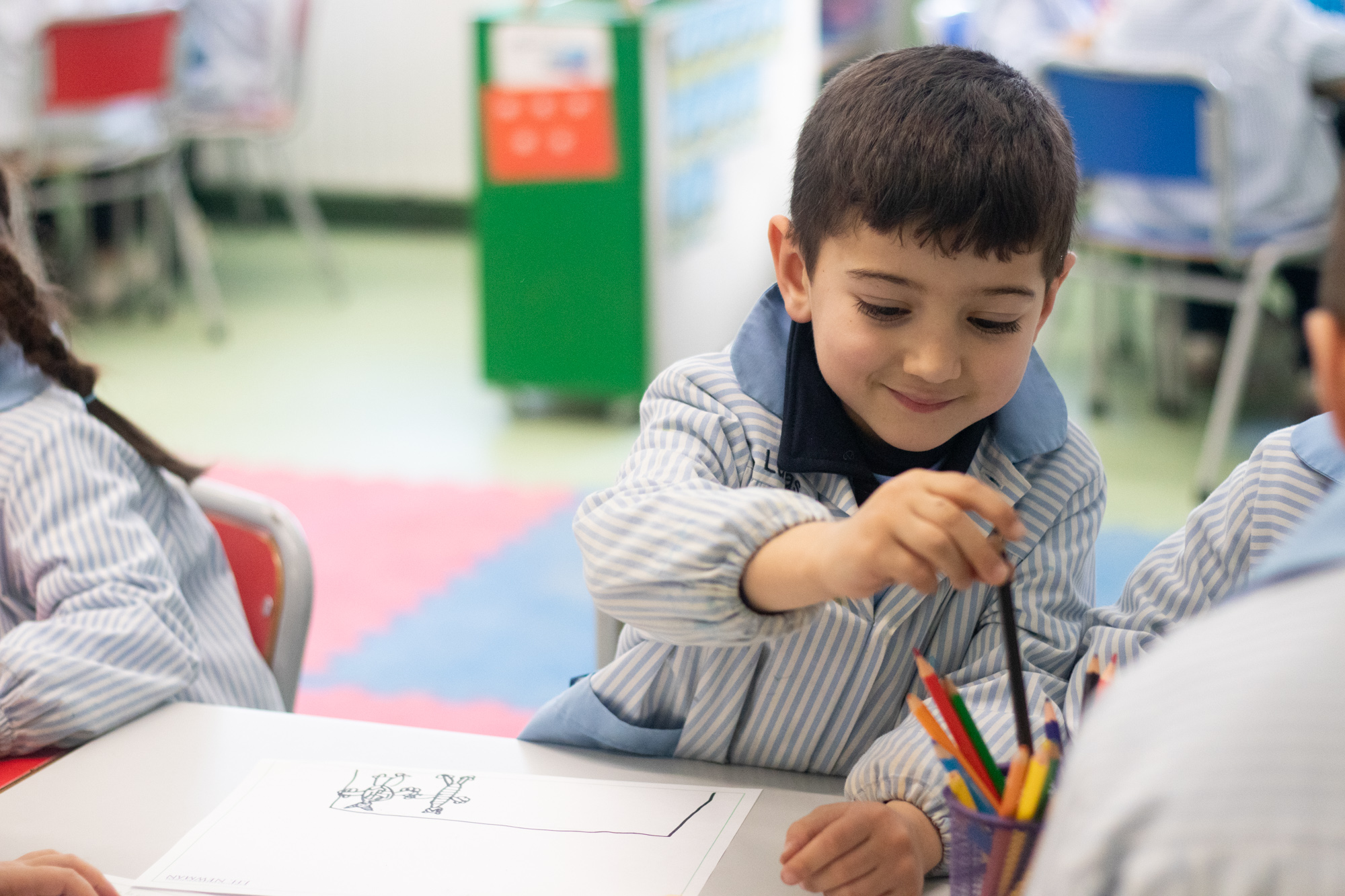
Classroom engaged in an early learning dynamic at the early years school.

Educational program by year

A unique and comprehensive approach

Teaching principles

Children can only grow and learn when they are accompanied by adults who see education as an act of love. Parents and other significant adults play an essential role by sharing with children the way they see and understand life, not only through their words, but by living alongside them.
Our relationship with parents is therefore fundamental. They are their children’s primary educators, and they entrust them to us, asking us to share in this responsibility.
For this reason, communication between the school and families must be open, warm and responsive. This is why we provide families with a variety of ways to stay in close contact with the school.
A child’s sense of freedom and security grows out of the emotional bond they share with the adults around them. This bond gives them the confidence to take action, explore, build relationships and express themselves without fear of making mistakes or being corrected. It is the driving force that encourages them to embrace life with confidence.
Our first priority is therefore for every child to feel loved exactly as they are and to discover that they are unique, deeply valued and made for happiness.

To educate means accepting each child as they are and accompanying them in their search for truth. It means surrounding them with opportunities to find their own way, while recognizing that they are at the heart of their own story and have needs and rhythms that are different from ours.
During the Early Years, we want everything within each child to have the opportunity to emerge. Children must therefore be allowed to take the lead in their own adventure. Rather than doing things for them, we accompany and encourage them as they grow through every experience, both great and small.
This idea is present in the traditional roots of the word educate: ex, meaning “out,” and ducere, meaning “to lead.” To educate is to accompany each person and help draw out the very best that lies within.

Children need to feel secure and to know that we believe in them. They begin to recognize their own worth when we encourage them to try things they do not yet believe they can do by themselves.
This is what we mean by autonomy. Being autonomous does not mean doing everything alone. It means growing within a relationship with someone who helps us move beyond ourselves and discover what we are capable of.
Our challenge as teachers is to keep each child’s desire to learn alive, allowing their interest in and enjoyment of what they experience at school to grow stronger each day.
Children live each moment of the present with intensity and wonder. For them, happiness is not found in “when I get there,” but in what is happening along the way. We must therefore begin with each child’s present reality, respecting every step of their journey, patiently following their pace and never rushing their development.
Young children also need their natural rhythms to be carefully respected: their need for sleep and food, their intellectual need to understand and learn, and their emotional need for affection—to be hugged, listened to and met with compassion and warmth.

Each child has an internal clock. What determines what they need is not simply what they ask for, but what their own nature requires.
Respecting a child’s pace also means allowing each stage of development to unfold in its own time. We must respect their cognitive and emotional development, protect their innocence and resist the temptation to hurry them through childhood.

At school, we aim to provide children with a safe, welcoming and peaceful environment. Throughout the day, they learn to enjoy and take part in the habits and routines of everyday life.
Clear points of reference help them understand that the day unfolds in an orderly way and that every moment matters. We guide them with simple, clear instructions. Children need to know that “this is what we are doing now, and nothing else.”
Every part of the day gives children an opportunity to act, feel secure and take an active role: sitting together at circle time, going to the bathroom independently, putting away the materials they have used, participating in activities, putting on and buttoning their school smocks, hanging up their belongings and taking responsibility for their own things.
Throughout the Early Years, we create opportunities for children to discover their own abilities and play an active role in classroom life. They may take turns being the classroom helper, work with the teacher to solve small everyday problems or support a classmate who needs help.
At this age, children learn through direct contact with the world around them. They spend their days observing, handling objects, experimenting and asking questions about everything they encounter.
For this reason, play and sensory experiences are central to our approach, as they open the door to knowledge and learning. We carefully design our spaces and teaching methods to give children tangible, hands-on experiences that they can explore for themselves.

Even the smallest moment of the day can awaken a child’s desire to learn, satisfy their curiosity and help them become more independent as they discover how the world around them works through everyday experience.
Our role is to accompany children and provide an environment that encourages discovery. They are naturally filled with wonder at the world around them, and their curiosity leads them to ask countless questions.
These questions arise from something deeper than a desire for factual explanations. Children want to understand the meaning of what they see. Their familiar “why?” expresses a profound longing for meaning and fulfillment.
During this stage, we must protect and nurture their questions. Rather than offering ready-made answers, we share with them the beauty and mystery of life.

At this age, children learn through direct contact with the world around them. They spend their days observing, handling objects, experimenting and asking questions about everything they encounter.
For this reason, play and sensory experiences are central to our approach, as they open the door to knowledge and learning. We carefully design our spaces and teaching methods to give children tangible, hands-on experiences that they can explore for themselves.

Educational objectives

Help children discover and understand who they are and the world around them, recognizing the goodness present in all things through a Christian understanding of life.

Nurture children’s interest in everything that happens around them by encouraging their natural sense of wonder and their desire to ask questions. We help them observe, be amazed and reflect on what they see and experience in every aspect of life.

Encourage parents to take an active part in the life and activities of the Early Years stage.

Help children become familiar with their own bodies and what they are capable of doing, while developing a positive and realistic sense of self. We also encourage them to recognize their deepest desire for truth, beauty, goodness, justice, freedom and happiness.

Develop children’s sensory abilities as a means of discovering the world around them and gaining a better understanding of themselves.

Encourage children to observe and explore their family, social and natural surroundings, and to recognize their value through a Christian understanding of life.

Foster an appreciation for beauty, order and cleanliness, as well as the responsible use of the school’s materials and facilities. Children are invited to help us create and care for beautiful, welcoming spaces.

Help children become increasingly independent in their everyday activities, learn to take responsibility and act creatively.

Help children develop, maintain and value essential habits related to hygiene, health, nutrition and safety.

Help children build relationships with others, discover the infinite value of every person and respect the basic principles of living together.

Develop children’s oral communication skills and introduce them to reading, writing and information and communication technologies.

Introduce children to basic logical, mathematical and numerical skills, as well as to science.

Develop children’s creativity through artistic expression, encourage them to appreciate works of artistic value and awaken their fascination with beauty.

Promote English language learning throughout all Early Years classes as part of the school’s bilingual education program.

EDUCATIONAL APPROACH IN EARLY YEARS

Oral and written language

Language development is essential throughout Early Years, as children begin learning to read and write toward the end of this stage. Throughout this process, and always respecting each child’s individual pace of development, we take a holistic approach to language and foster a love of communication through a wide range of games and activities. Sessions take place every day.

Mathematics

Learning mathematics means understanding how reality is structured and being able to describe it. In Early Years, mathematics is primarily hands-on and play-based. We present children with challenging situations in which they can develop strategies, solve problems, discover relationships and explore different possibilities. Through these experiences, they gradually develop mathematical thinking. We use hands-on materials and age-appropriate board games. Sessions take place every day.

English

hroughout their education, our students experience a process of language immersion that develops from spoken communication to writing. In Early Years, learning is based on a communicative approach, making English the primary means of communication between teachers and students. Gradually, through games, songs, stories, role-play, arts and crafts, dancing and other activities, children enjoy discovering a new language and begin using it to communicate with their teachers and classmates. Sessions take place every day.

Psychomotor development

Children take part in games and activities that support their sensorimotor development, including movement, balance and coordination. Through these experiences, they discover their own abilities and learn to express themselves within a social and emotional context. Sessions are led by a specialist psychomotor development teacher in a dedicated room. Children also complete neuromotor circuits consisting of a series of exercises arranged as a circuit to support their neurological development. Children in the first year of Early Years have two sessions per week. Children in the second and third years have one session per week.

Music

In music class, children express themselves by singing and playing instruments, following rhythms and taking part in dances, melodies and songs that encourage movement and physical expression. They also learn to listen to and enjoy classical music and many other musical styles.

Religion

We pray together every day. We begin the day by helping children recognize that everything they have is a gift: their lives, their families, the sky, their friends and much more. On some days, we visit the school chapel to pray for something important that is happening. We celebrate special occasions together, but above all, children learn to discover the loving presence of Jesus in the experiences of everyday life, both at home and at school. There are two sessions per week.

Art

Art is a form of language that enables children to express their ideas and emotions creatively while developing their sensitivity, self-esteem and creativity. Artistic activities offer children an ideal means of self-expression and allow them to communicate what they wish to convey. Art is also essential for developing critical thinking, personal taste and aesthetic sensitivity, while helping children appreciate the beauty around them. There are two sessions per week.

Pupils at the early years school carrying out early learning activities.
Classroom and spaces at the bilingual school, designed for early learning.

Download the brochure of Newman Childhood Education

Newman Early Years Methodology

Learning Corners

At Newman School, we use a learning-corners approach. The classroom is divided into different areas that reflect the wide range of skills children develop through play during the Early Years.

  • Gross Motor Area: a space for large movements, crawling, pushing, and jumping
  • Calm Area: a library corner, writing corner, and pretend-play corner
  • Hands-On Learning Area: spaces for science, including mathematical thinking and spatial awareness, experimentation, and nature
  • Creative Expression Area: Music and visual arts corners

Teachers select the materials and activities for each corner according to the weekly curriculum plan. Every activity includes an element of play. Children therefore feel that they are playing much of the time, while teachers intentionally use these experiences to support the learning considered most important.

The choices children make also reveal a great deal about them: their mood, whether they are seeking a more active or quieter space, and whether they are drawn to particular materials because they can transform them or use them to create something artistic.

This approach encourages children to observe, choose, plan, and act independently. It also gives them opportunities to reflect together on what they have done and consider how they can improve.

Educational activity at the early years school.

Early Years Newman Questions and Answers

Yes. The school day begins one day earlier for 3-year-olds than other students in other stages. The first includes two hours of welcome time with this head teacher.

Yes. We have three assistants at this stage. They support all year groups, but in the first term their presence is mainly for the 3-year-olds.

It is common for children to have achieved bowel and bladder control before starting school. In the event that this has not occurred, we work closely with the families to support the child in this process.

Only the 3s. From the second year, families who wish may also sign up for an extracurricular activity at that time (13:30h-14:30h).

Yes, only the persons authorised to do so by the family. At the start of the year, families are given collection cards so that they can authorise specific individuals, who must show the card to the teacher at pick-up time.

Yes. These are offered at the beginning of the course to the students of the 2nd and 3rd years (4- and 5-year-olds classes). They include sports, drama, English reinforcement and more. You can find them on the school’s website.

Yes. In the school we have a specialist in Hearing and Language that works to support children with articulation difficulties or language development. As an added bonus, we’ve got a speech therapist that works internally in the school to identify, work with, and resolve potential difficulties in language or learning.

Through different channels: communication CIFRA Platform, which is the official communication tool of the centre, private parent emails, social networks and web.

  • 9:00 – 12:30h Morning timetable.
  • 12:30 – 13:15h Lunch.
  • 13:15 – 14:45h Nap (three-year-olds) / playground or extracurricular activities.
  • 14:45 – 16:45h Afternoon timetable.

Yes. There is the possibility of extending the hours for the families that need them in the morning and in the afternoon. From 7:30 to 9:00h and from 16:45 to 18:00h. There is also the option of booking 30-minute morning slots.

Lunchtime is from 12:30 to 13:15 hrs.

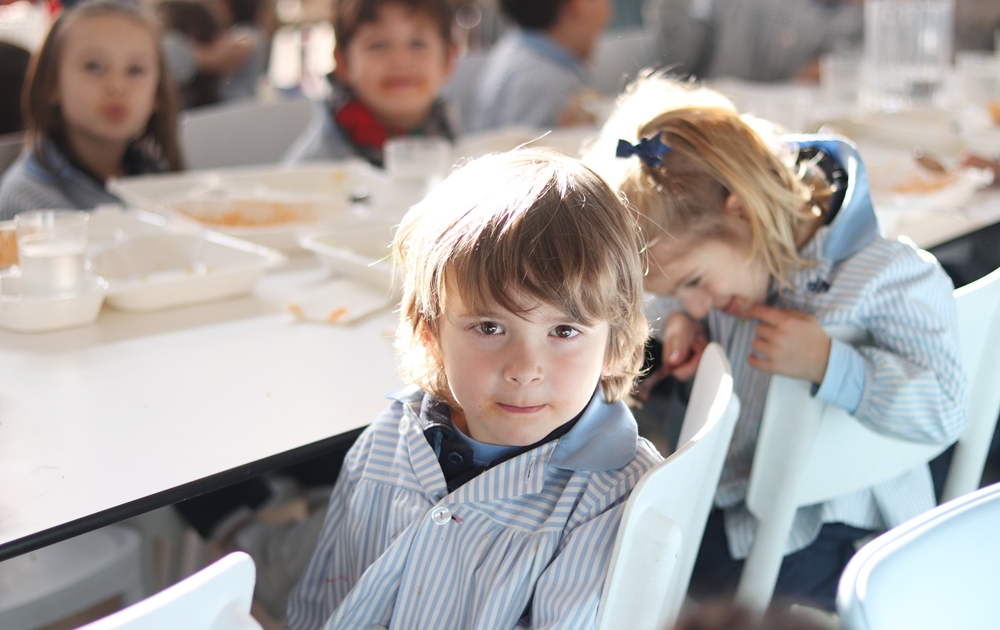
Yes. The kitchens are located in the school and the food is prepared daily on-site. Parents can view the menu of the dining room through the school website or via the CIFRA platform.

In the pupils’ dining hall, at a separate time and in a space set up specifically for them.

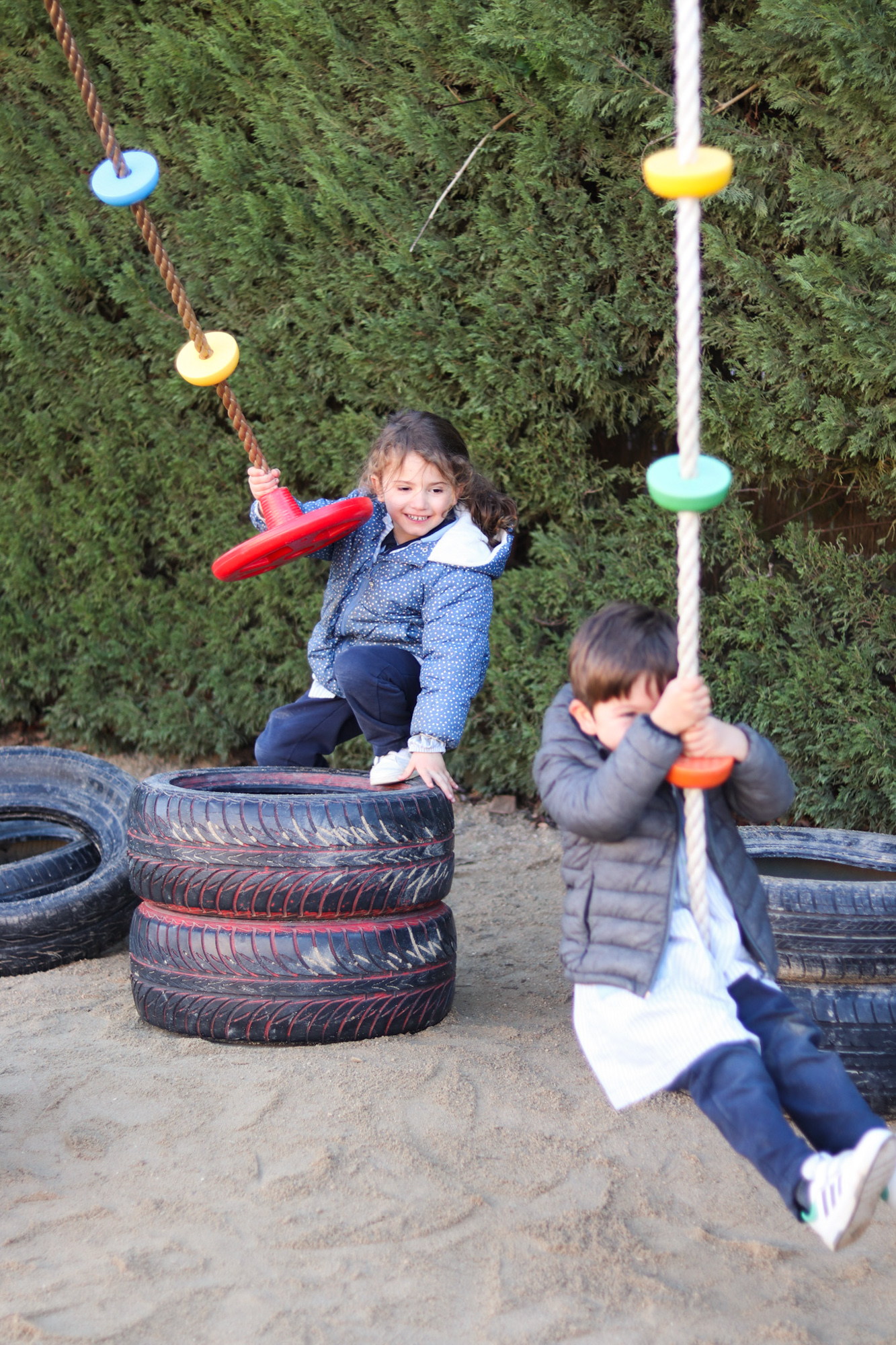
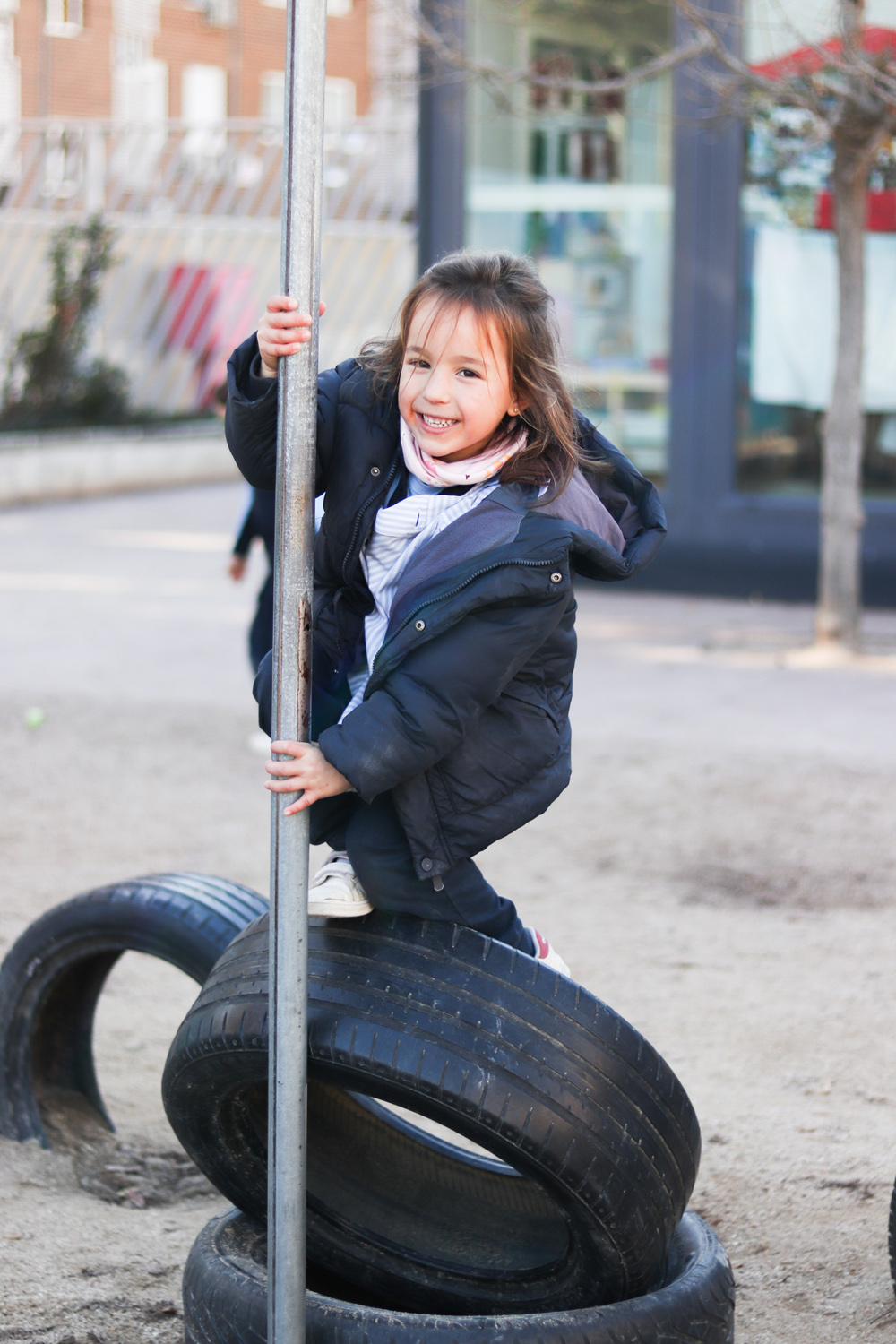
Yes. It is of exclusive use for Early Childhood Education, with direct access from the classrooms. It is equipped with everything needed to support motor development at this age: a sandpit, rubber flooring, an area for football, swings, climbing equipment, and playhouses.

Yes. We have a designated room for motor skills development, equipped with all the materials for that activity and with the technical characteristics needed, including a mirrored wall and climbing apparatus.

The school shall provide the school supplies necessary for the entire course so that every child has the same resources and can share them.

Yes. The uniform for Early Childhood Education is a tracksuit, a t-shirt and a smock.

For the learning of English we use a method of Full immersion with native and bilingual teachers. Every day children have between 1 and 2 sessions of English, depending on the course. In addition, we work with a method of Phonics in a bilingual, communicative environment, and with small groups (desdobles) for language work. For more information on bilingualism, visit our website.

We have one session per week of religion adapted to these age-groups: a first approach through music, small sentences, dialogue in class, and celebration of some holidays.

At school, we have a nurse who is responsible for recording and monitoring all medications needed.

The nurse maintains close communication with families and puts a monitoring plan in place. In the dining room, we offer different menu options to suit various needs. Children with food requirements have an indicator, and their table clearly shows their allergy or intolerance to ensure extra care is taken during mealtimes.

Yes. The school provides optional accident insurance.

Yes. The AMPA is a link between the parents, the school and the students with the idea to provide support and resources for the best performance of the school community. More information and how to get involved can be found on the website.

Would you like to get to know the school?